Most startups do not think about scaling when they begin. They think about getting something to work. That is usually the only goal in the early days. If the product runs, if users can log in, if something useful happens on the screen, that already feels like progress.
There is also a certain ease in that phase. Everything feels light. Changes are quick. You add something in the morning, and it works by the afternoon. Nothing feels heavy or slow, and there is no reason to think too far ahead because things are moving fast anyway.
Then something shifts, but not in a dramatic way. It is usually small. A delay here. A slight lag somewhere else. Someone on the team says something feels slower than before, but it is not serious enough to stop work. So it gets ignored.
That is how the early stage of scalable software development actually begins. Not as a decision, but as a slow realization that the system is starting to stretch beyond what it was originally built for.
Growth Does Not Break Systems Immediately
One of the reasons startups miss this stage is that nothing breaks all at once. Software development for startups often reaches a point where things still work, just not as smoothly as before. That makes it harder to act early.
A feature that once took very little effort to build now takes longer. Not because the feature is complex, but because everything is connected. Small changes begin to touch multiple parts of the system. That is when the structure starts becoming visible.
This is usually where scalable software architecture becomes relevant. Not because someone planned for it, but because the current setup is no longer flexible enough to keep up with changes.
The First Fix Is Rarely Technical
At this point, many teams start looking at tools. They explore a new startup tech stack or consider switching frameworks. It feels like the right move, but it often does not solve the real problem.
The issue is not always the technology. It is how things are organized. A system that is tightly connected will remain difficult to scale, no matter what tools are used.
So the first step is usually stepping back and looking at how things are structured. Which parts depend on each other? Which parts could be separated? That clarity matters more than the tools themselves.
Breaking the System Changes Everything
There is a moment when teams realize that keeping everything in one place is no longer working. That is when the idea to build scalable applications in smaller parts starts to make sense.
Instead of one large system, different functions are separated. User handling becomes one part. Payments another. Data processing something else. This is often where microservices architecture for startups enters the discussion, even if it is not fully implemented right away.
Even partial separation helps. Because now, making a change in one area does not affect everything else. That alone reduces a lot of friction in development.
Backend Stress Shows Up Quietly
Most visible changes happen on the front end, but most problems begin in the backend. Scalable backend development becomes important when the system starts handling more data and more requests than before.
Backend development for startups often begins with simple structures. That works well in the beginning, but as usage grows, those same structures can slow things down.
Sometimes the fix is surprisingly small. A better query. A caching layer. A different way of storing data. These are not dramatic changes, but they improve performance in a noticeable way.
Cloud Feels Like a Turning Point
There comes a stage where the system starts feeling limited by its infrastructure. That is usually when cloud-based software development becomes part of the conversation.
Cloud application development in India has grown quickly because it allows systems to adjust without major changes. Instead of worrying about capacity, the system can scale based on usage.
But the cloud alone does not solve everything. If the structure is not flexible, the same problems continue, just in a different environment. So it works best when combined with better architecture.
Planning Too Much Can Slow You Down
There is always a temptation to fix everything at once. Especially after the first signs of scaling issues appear. Teams start looking for complete solutions, often following a startup app development guide that suggests building for every possible future need.
But in reality, startups do not grow in a straight line. Priorities change. Features evolve. What seems important today might not matter later.
So instead of building everything, it is better to allow room for change. That is where software scalability best practices become practical. Not as strict rules, but as flexible guidelines.
Performance Becomes More Noticeable Over Time
At first, performance issues feel minor. A small delay. A slow response once in a while. But over time, these issues become more visible.
Software performance optimization becomes necessary not because things are broken, but because users start noticing the difference. And once that happens, it affects how they experience the product.
Fixing performance is often about small improvements. Better handling of requests. Reducing unnecessary processing. These changes are not always visible, but they improve stability.
DevOps Brings Consistency
Releasing updates gets more complicated as your system gets bigger. DevOps for startups helps with this.
It's about how we move from doing everything the hard way, manually, to having a structured way of doing things, where we test an update before it goes out, make it easier to deploy, have fewer errors, and create a more predictable environment when making changes.
We don't add any complexity; we reduce uncertainty, which is what you need when your system is growing.
Handling Sudden Traffic Spikes Without Breaking the System
Most businesses developing initial technology products do not account for unexpected spikes in user-demand traffic. For example, if your business launches a new product, conducts an advertising campaign, receives unexpectedly high social-media visibility, etc., users will attempt to access your product all at once via the Internet.
As a result, your service has the potential to be overwhelmed by the immediate flow of users and exceed its specifications. Depending on how well your initial technology development went, you may not have enough server resources or develop sufficient capacity to process requests quickly. As a result, your service will experience performance degradation and user frustration due to slow response times or failed requests.
Businesses Developing Systems That Need to Scale Must Consider The Impact of Load-Balancing Technology On Capacity Planning. Since your product may need to be accessed by thousands of users at once, it is critical to implement load-balancing technology to distribute user demand among multiple servers instead of having all of your users access your product through a single server.
Additionally, cloud-based software development allows for auto-scaling (i.e., dynamically and automatically allocating additional system capacity depending upon current demand). By building products with these capabilities in mind, TMITS can ensure that we are able to address situations where demand is unexpected and may create challenges for the continued reliable operation of a service.
Importance of Monitoring and Real-Time Insights
As systems scale, obtaining insight into what is happening inside becomes increasingly difficult without sufficient visibility into them. Many start-up companies are building products/features, but do not adequately monitor how their products/features perform in relation to how their products/features will function under the current conditions.
Because of this, when problems arise, there typically is no descriptive information available/accessible, so there is a greater delay between identifying a problem and being able to implement a remedy.
Monitoring tools/systems provide an understanding of how scalable backend development is performing across different usage patterns.
They track response time, the load being placed on the server, and how users of that system are interacting within the application (user behavior) in real time. The data collected from these tools/systems is instrumental in making more educated decisions related to specific software performance optimization opportunities.
For startup companies implementing IT solutions, real-time visibility into how their application is performing at any given moment enables the team responsible for maintaining the application's health and vitality to recognize a small problem before it becomes a larger issue.
This opportunity allows the team to proactively fix small issues before they become large problems, thus preserving the overall health of the application. As more businesses begin to leverage technology to grow their business operations, the amount of information available through monitoring tools/systems will continue to grow and become invaluable as the application continues to scale.
Not Everything Needs to Be Built Internally
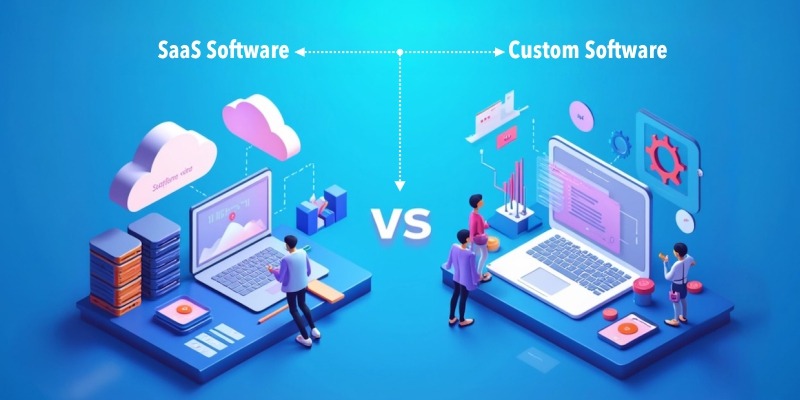
At some point, startups realize that building everything themselves is not always necessary. SaaS development for startups becomes an option, where certain parts of the system rely on existing solutions.
This reduces effort and allows teams to focus on what actually matters. It also helps with scaling, because not every component needs to be managed internally.
Where TMITS Can Help
At TMITS, most of the work happens in this stage. Not at the very beginning, but when systems start feeling limited.
Custom software development in India in this context is less about starting fresh and more about improving what already exists. Sometimes it is restructuring. Sometimes it is optimizing. Sometimes it is simplifying.
Every startup is different, so there is no fixed approach. The goal is always the same, though. To create startup software solutions that can grow without constant rebuilding.
Closing Thought
Developing software that is scalable is more involved than simply launching a product and developing the software to respond to problems as they occur.
The aim should not be to anticipate every possibility; instead, it should be to create a solution that can adapt to changes in the business environment as they happen.
Change is not something that will ever go away, and by ensuring that your program can keep up with those changes, you are creating a more manageable growth environment.
FAQs
1. What is scalable software development?
It is building software that can handle growth without slowing down
2. Why do startups need scalable software?
It helps them grow without rebuilding systems repeatedly
3. What is microservices architecture for startups?
It divides applications into smaller, independent parts
4. How does cloud-based software development help?
It allows systems to scale resources based on demand
5. When should scalability be considered?
It is better to think about it early, even if applied gradually