If you speak to someone who has been building software for a while, they will usually tell you the same thing. The work itself has not changed as much as the way it feels.
Earlier, most of the effort went into doing things step by step. You wrote code, you checked it, you fixed it, and then you went back and did it again. It was a cycle that did not really surprise anyone.
It still works that way in many places, but something has started to shift around it.
AI is now part of that process, though not in the way people expected when they first heard about it. It is not replacing teams or taking over entire systems. Most of the time, it just sits quietly in the background and helps reduce small pieces of effort.
At TMITS, this change is not treated like a big transformation. It is more like something that slowly became normal without anyone announcing it.
It Does Not Feel Dramatic
When people hear about artificial intelligence in IT, they imagine something very visible. A system that changes everything at once. That is not what happens in practice.
The first time you notice it might be something small. A suggestion appears while writing code. A warning shows up before something breaks. A task that usually takes time finishes quicker than expected. None of these moments feels important on its own. You might even ignore them.
But after a while, you realize that these small changes are happening more often. Work starts to move a little faster, and things that used to take effort now feel lighter. That is usually when it becomes clear that something has changed.
Writing Code Feels Slightly Different Now
Developers are still writing code. That part is not going anywhere. What has changed is how they begin.
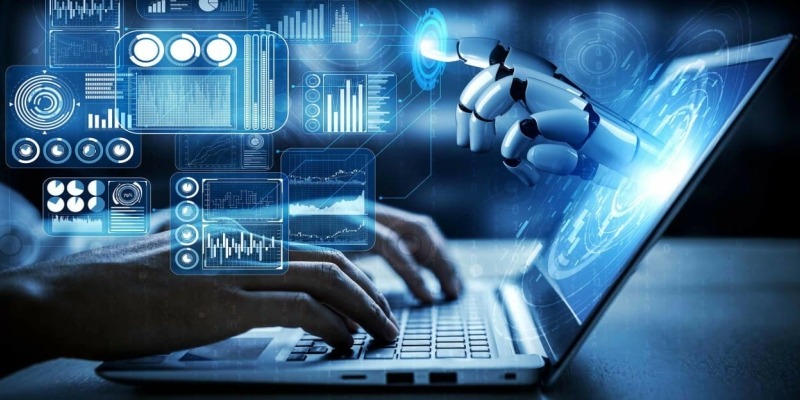
Instead of starting from nothing, there is often a suggestion or a rough structure already in place. AI coding tools can offer that starting point. Sometimes it is useful, sometimes it needs correction, but either way, it reduces the initial effort.
This does not mean developers rely on it completely. In fact, most of the work still depends on understanding what needs to be built. But the time spent on repetitive patterns has reduced.
In areas like machine learning software development, this becomes more noticeable because similar structures appear again and again. AI is good at picking up those patterns and bringing them back when needed.
So the work remains technical, but the focus shifts a little toward decision-making rather than repetition.
Debugging Does Not Feel As Heavy
Anyone who has worked on software knows how unpredictable debugging can be.
You fix one issue, and something else appears. You follow a path only to realize the problem started somewhere else entirely.
AI tools have started to ease this, not completely, but enough to notice. By looking at how code behaves, they can point out areas that are more likely to cause issues. Sometimes they even suggest what might be wrong.
It is not perfect, and it does not remove the need to think through the problem, but it reduces the time spent searching. That alone changes how frustrating the process feels.
Decisions Are No Longer A Blindshot
There was a time when many product decisions were based on instinct.
You would build something because it felt right or because similar products had it. Sometimes it worked, sometimes it did not.
Now there is more information available. AI can look at how users interact with a system in ways that would take much longer manually. It can show patterns that are easy to miss otherwise.
So instead of guessing what users want, teams have a better idea of what is actually happening. This does not remove judgment from the process, but it supports it.
The Small Repetitive Work Is Slowly Disappearing
There are parts of development that are necessary but not very interesting.
Setting up environments. Running tests again and again. Handling small configurations that do not really change much. These tasks still exist, but they are starting to take less attention.
Automation supported by AI can handle many of these steps in the background. You do not have to think about them as much.
And when you do not have to think about them, your focus shifts to things that actually need attention. Over time, this makes work feel less scattered.
Adding AI Is Not Always Simple
One thing that gets missed frequently is that many systems aren't prepared for AI yet.
Older systems, particularly, can be slow to change because they were created under an entirely different set of circumstances than what exists today, meaning any changes made to them will require extensive planning ahead of time.
Custom software development, then, will always matter because AI cannot simply be added to a system with an assumption that it will work seamlessly. Rather, AI must mesh well with what has already been built.
At TMITS, this part is handled with some caution. The goal is not to use AI everywhere, but to use it where it actually makes a difference. Sometimes that means doing very little. Sometimes it means making bigger changes.
Startups Are Approaching This Differently
Smaller teams tend to move faster when it comes to adopting new tools.
They are not tied down by existing systems in the same way larger companies are. That makes it easier for them to experiment.
AI helps them reduce the time needed to build and test ideas. It does not remove uncertainty, but it makes it easier to move forward even when things are not fully clear.
In many cases, AI becomes part of their workflow without being treated as something separate. It just becomes another tool they use.
Security And Risk Are Being Looked At Differently
Artificial Intelligence (AI) is beginning to change the way we think about security as well. In the past, we relied on static (fixed) rules to create security systems. If any unusual event occurred, it would be tagged based on previously defined criteria. Static rules created a certain amount of situational awareness.
However, they typically had a difficult time detecting many types of patterns due to the generally hidden nature of these underlying associations.
Now, we are at a point of increased adaptability in security. AI can (and now does) monitor behaviour over time and identify changes that may not conform to the previous definition of a behaviour. It is not solely reliant upon pre-programmed rules; rather, it learns from actual behaviours.
As a result, risks can sometimes be identified before they become full-blown problems (i.e., long before they reach the level of an emergency), and the frequency of false alarms is greatly reduced, enabling teams to operate with greater efficiency and fewer interruptions.
For businesses, this provides an additional confidence level. Confidence is not because the system has become totally risk-free, but because the level of monitoring (i.e., situational awareness) has improved dramatically.
Maintenance Is Becoming Less Reactive
Traditionally, software maintenance was a straightforward process. When something breaks, we can fix it.
Up until recently, a majority of teams have accepted this as the norm because of the lack of a practical means for predicting issues beforehand. Now, the way we maintain software is changing.
Through the use of Artificial Intelligence, systems are able to track usage trends over time and recognize warning signs prior to failure. For example, warning signs include: slowing system response time; repeating errors; and small, unexpected inconsistencies beginning to form.
By using these indications of future problems, maintenance can now be performed pre-emptively rather than reactively.
This transition from a purely reactive to a more proactive method of performing software maintenance eliminates many of those unexpected surprises that result from being caught off guard.
Over the long run, this will result in creating a feeling of security and manageability with technology systems and make them more predictable.
Cloud Plays A Quiet Role In All Of This
AI needs resources. Processing data, running models, and handling large workloads all require flexibility.
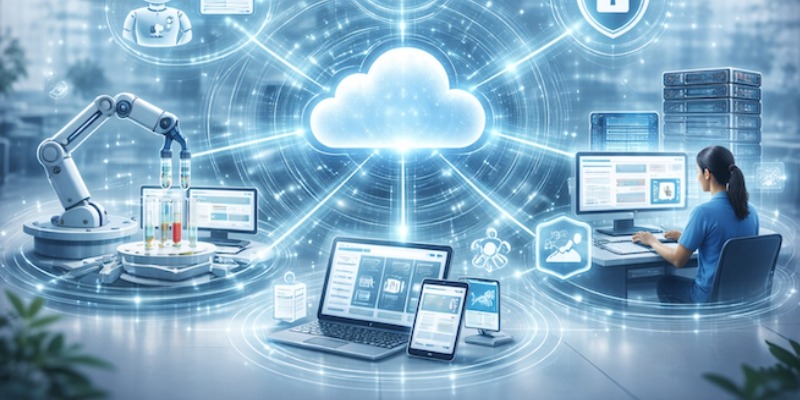
Cloud systems make this easier. Instead of managing everything locally, teams can use cloud infrastructure to scale when needed. This allows them to work with larger systems without committing too much upfront.
It also makes it easier to adjust as requirements change. You do not always notice this part directly, but it supports everything else.
People Are Still At The Center
Even with all these changes, one thing remains clear. Software is still built by people.
AI helps with certain parts, but it does not replace understanding.It does not make any decisions as to what will be created or why it will be created.
Those decisions will still come from personal experience, context, and sometimes gut instincts.
Finding the proper balance between these three factors is imperative. If the proper balance is not struck, the technology to be created will be meaningless.
Where TMITS Fits Into This
At TMITS, AI is not treated as something that needs to be added everywhere.
The focus is more practical. If it helps reduce effort, it is used. If it improves accuracy, it is considered. If it does not add value, it is left out.
Custom software development, in this case, is about choosing what actually works rather than following trends. Every system is different, so the approach changes as well.
Your Next Step
AI is not changing software development in a dramatic way. It is changing quietly.
Small improvements are making the work smoother. Repetitive tasks are becoming less visible. Decisions are becoming easier to support.
And over time, these small shifts are adding up. Not into something completely new, but into something that simply works better than before.
Contact TMITS to see how we can help you ride this tide of the next generation of software development.
FAQs
1. How is AI used in software development?
AI is used in small but practical ways, like assisting with coding, identifying issues early, and analyzing data patterns. It helps reduce effort without replacing the actual development process.
2. Does AI replace developers?
No, developers are still essential for building systems and making decisions. AI supports their work but does not replace the need for understanding and planning.
3. What are AI software solutions?
These are systems that use AI to automate tasks, improve performance, and provide better insights through data. They are usually built to support existing workflows.
4. How does AI improve custom software development?
It reduces repetitive work, speeds up certain processes, and helps teams make more informed decisions based on actual usage data.
5. Is AI useful for startups?
Yes, it helps startups move faster by simplifying development and reducing the time needed to test and build new ideas.