Business Automation Solution for •••••••••••••
Business automation solution built to simplify quarry operations, billing, transactions, reporting, and daily workflow management in one system.
Why teams choose us
Why TMITS
- Senior engineers on every build
- Outcome-based delivery, owned end to end
- Systems built to scale and last
••••••••••••• is a quarry and mining company that undertakes operations involving materials movement, transactions, bill generation, and reporting. This business entity handles numerous activities, which need proper coordination between various tasks such as record management, billing, and operational reporting to ensure a seamless workflow. With the growth of this business, the need for organized operations became vital to the team.
Making Daily Quarry Operations Easier with Automation
This project was focused on making the day-to-day work easier and more organised. The challenge for this enterprise was not that there was no software application, but rather the fact that critical processes were being undertaken independently in different areas without a cohesive flow of the process.
In the absence of automation, all the record keeping processes were being done manually: repeated verification of data, separate bill generation and a subsequent reporting process. Such a disjointed process caused minor problems to affect the entire process chain.
So, we built one connected system where the work could move smoothly from one step to the next with less manual effort and better control.
Therefore, we developed an integrated system through which processes could be completed sequentially with minimal intervention.
The Challenges
The foremost problem was with scattered data management. Important data was spread across various documents and databases, making it hard to track.
It was difficult to connect master records, including customer data, material data, and other operational information, with transactions and billing. Due to this, the same data would need to be input repeatedly.
Transaction management also seemed to take a long time. Transaction entries were being maintained manually, and any verification of this information depended greatly on repeated record checking. This resulted in mismatches and caused delays in the overall work process.
Billing was another challenge. Since billing was not directly connected to the operational transaction flow, generating invoices required additional manual verification. This slowed down the billing process and created dependency on manual checking.
Another problem was related to the difficulty of reporting. Here, the team had to retrieve data from various locations before producing the report. This meant that they did not have immediate information but had to organize data beforehand.
There was also no proper control over user access. Different users needed different levels of permissions, but without a proper privilege system, controlling access and maintaining data accuracy became difficult.
Our Approach to the Solution
It became possible to understand how the operations are conducted within the business on a day-by-day basis. Rather than developing a common software environment, we worked out the process and tailored our software accordingly.
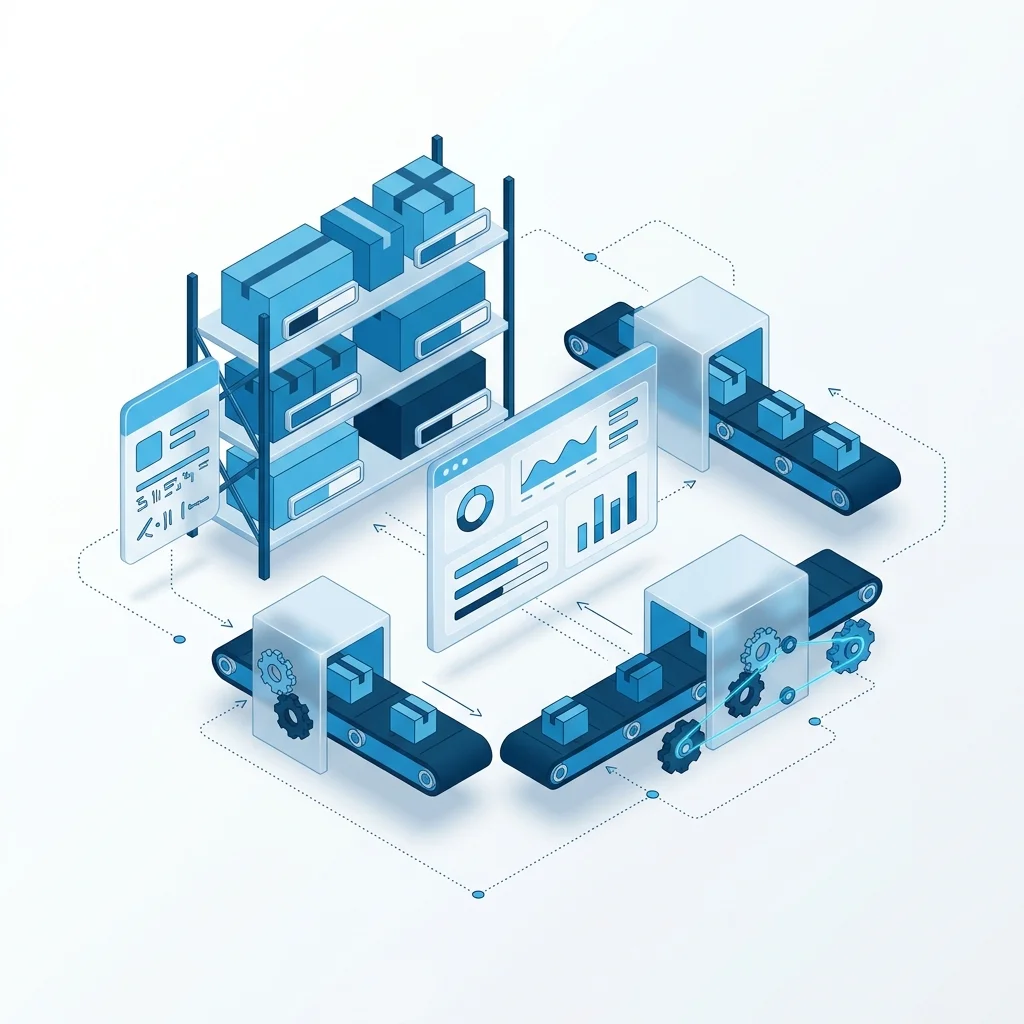
The software application had several modules according to the daily management process within the quarry.
The Masters module was aimed at providing for record-keeping in a comprehensive manner that facilitated easy data management without repetitive entries.
The Transactions module assisted in dealing with the entries in the right order using the daily workflow process rather than manually recording each transaction individually.
The connection between transactions and the Billing module made the process of generating invoices more organised and eliminated the need for manual verification.
The Reports module was implemented to facilitate tracking by giving direct access to reports without going to other sources of information.
The privileges module was designed as an aid for managing access rights for users. Different access privileges were assigned to team members based on their respective roles in the process.
Search and notification options were integrated to facilitate day-to-day use of the system.
The Results
- 60% reduction in repeated manual data entry
- 50% faster transaction tracking and verification
- 45% improvement in billing process accuracy
- 70% quicker report generation and data access
- Centralized management of records, billing, and transactions in one system
- Role-based access implemented for better operational control
- Reduced dependency on spreadsheets and manual follow-ups
- Improved overall workflow visibility and daily process management
Bottomline
The project helped ••••••••••••• reduce manual dependency and organize daily operations inside one system. Instead of handling transactions, billing, reports, and records separately, the business now works through a connected workflow that is easier to manage, track, and control.
The result was better operational visibility, fewer repeated tasks, improved data accuracy, and smoother day-to-day business handling.
More case studies

Let's map your highest-leverage system
Tell us where revenue leaks, where operations slow down, or where the next product should go. We'll come back with a clear, senior point of view — no obligation.