
Turning Complex Workflows Into Structured Execution at ••••
One of the world's largest tooling companies replaced fragmented, email-driven processes with a structured workflow layer, cutting turnaround by up to 55% and manual effort by up to 70%.
Why teams choose us
Why TMITS
- Senior engineers on every build
- Outcome-based delivery, owned end to end
- Systems built to scale and last
••••••••• is one of the world’s largest tooling companies, providing complete metal cutting solutions and carbide inserts for milling, stationary tools, holemaking, and tooling systems. Its long-term direction around automation, digitalization, collaboration, and smart software made it a natural fit for autonomous operations and intelligent agent systems.
A Global Leader Navigating Workflow Complexity
•••• is an international manufacturer whose foundation lies in accuracy, attention to process, and a high level of trust. As •••• grew, though, the problem wasn't getting work done; it was making sure that work moved smoothly from one point to another, which meant a lot of handoffs and follow-ups.
Even simple tasks needed to be coordinated, which slowed down the execution process. The opportunity was to replace scattered efforts with a structured workflow layer that would bring clarity, faster decision-making, and better control across operations while reducing repetitive manual intervention.
The Issues:
Once we looked closely at the workflows, the gaps were easy to spot.
A lot of key processes were still being handled manually or through emails and informal tracking. That created delays, confusion, and made it harder to stay in control of what was happening.
Here’s what stood out:
The first issue was fragmented request handling. Processes like sales returns, service provider bills, purchase approvals, stock adjustments, and proforma invoices were all being handled separately. There was no single structure, and each team followed its own way of working. That made tracking and consistency difficult.
The second issue was visibility. It wasn’t always clear who raised a request, where it was stuck, or what needed to happen next. Teams had to rely on follow-ups just to understand the status, which slowed everything down.
The third issue was the amount of repetitive work involved. Routing requests, sending reminders, updating statuses, sharing reports, these things were happening manually again and again. Necessary, but time-consuming.
Our Solution
We didn’t treat this as just a system build. The focus was on fixing how work actually moves.
The idea was simple: give every process a clear structure, reduce dependency on manual coordination, and make it easier to track everything from start to finish.
Workflow-led process design
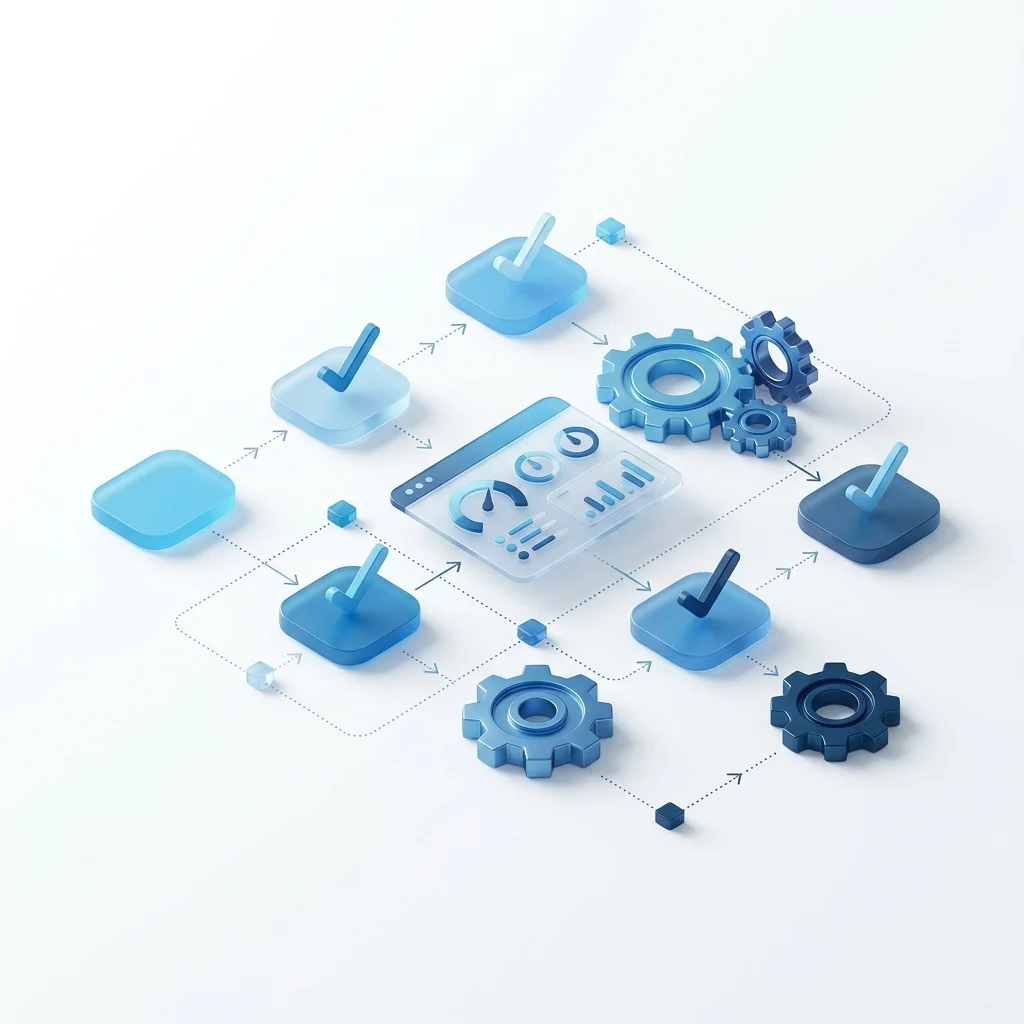
We broke down each process and mapped it step by step—what happens first, who approves, what comes next, and when it closes. This gave every request a clear path instead of being handled differently each time.
Rule-based routing and tracking
We created rules instead of waiting for someone to move things forward. Rules were based on the type of request, the stage, and who was involved. The system would then move it to the right place. This reduced delays and made ownership clearer.
Process-specific application design
We built separate applications for the main workflows, keeping them simple but structured:
- Sales Return Application – for creating and tracking return requests with proper approval flow
- Service Provider Application – for managing service bills, approvals, and payment tracking
- PO Approval Application – for handling purchase orders, approvals, and updates
- Stock Adjustment Application – for controlled stock-related requests
- Proforma Invoice Application – for managing invoice requests and tracking status
Each one focused on doing one job properly, instead of mixing everything together.
Centralized visibility and control
All of this came together in a single view. Teams could now see what’s pending, what’s completed, and what needs attention, without chasing updates.
Automated notifications and reporting
We added simple triggers for reminders and updates. So instead of someone having to follow up manually, the system nudged the next step when needed. Reports could also be pulled instantly when required.
The Result
The transformation delivered measurable improvements across workflow efficiency, process control, and operational visibility. By replacing fragmented handling with structured systems, •••• established a more predictable and scalable execution model.
Workflow Turnaround Time: Dropped by 40–55%. Clear process stages, quicker approvals, and fewer manual follow-ups made things move faster.
Approval Cycle Efficiency: Improved by over 50%. Requests now go straight to the right stakeholders through rule-based routing—no back-and-forth, no delays.
Operational Visibility: Reached full traceability. Every request can be tracked end-to-end, from initiation to approval history, current status, and final closure.
Manual Effort Reduction: Cut by 60–70%. Routine tasks like routing, reminders, and status tracking no longer eat up time.
Process Compliance: Increased consistency to 95%+ adherence through standardized workflows and controlled approval structures.
Reporting & Audit Readiness: Reporting time dropped by 70%. Real-time dashboards and ready-to-export records make audits and reviews straightforward.
Error & Rework Reduction: Reduced by 30–40%. Structured validation and controlled data flow helped minimize mistakes.
Scalability: The system now handles 2–3X more requests without adding operational overhead.
Bottomline
•••• did not need more complexity. It needed more intelligence in how work moved.
What made this transformation effective was not just automation alone. It was the combination of workflow logic, role-based control, and intelligent orchestration across multiple business functions. The result was an operational environment that could act with more speed, more clarity, and more precision.
Still relying on manual coordination and scattered workflows? Time to bring structure and control.
More case studies


Let's map your highest-leverage system
Tell us where revenue leaks, where operations slow down, or where the next product should go. We'll come back with a clear, senior point of view — no obligation.