
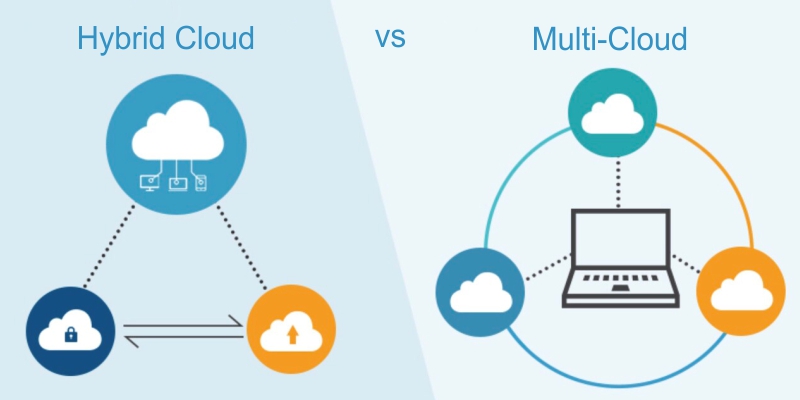
We talk to IT heads and business owners all the time who are trying to figure out their next cloud move. They usually have some workloads still sitting on their own servers or in a private setup. At the same time, they want the speed, scalability, and latest features that come from public clouds like AWS, Azure, and Google Cloud. The question that keeps coming up is simple. Should we do hybrid cloud or multi-cloud? Or maybe some mix of both?
There is no one-size-fits-all answer. It really comes down to what your company deals with every day, what keeps you up at night, and where you plan to be in the next year or two.
Let me explain it in plain terms based on real projects we have done at TMITS.
What Hybrid Cloud Actually Is
Hybrid cloud means you keep some things in your own private environment, usually servers in your data center or a dedicated private cloud, and connect them tightly to one public cloud provider. The magic is in the connection. Data and applications can flow between your private side and the public side without much friction. You hold on to full control for anything sensitive or regulated while you tap into the public cloud for extra capacity, testing, or bursty workloads.
Think of your on-premises setup as your home base and the public cloud as a big shared highway you can jump onto whenever you need. You decide what stays private and what rides out.
This approach works really well when rules force you to keep data close. Banks, hospitals, government contractors, manufacturers with safety-critical systems, they often choose a hybrid. They can leave regulated or legacy stuff on their own hardware while running customer-facing apps, analytics, or development environments in the public cloud. It also helps if you have already spent a lot on hardware and want to get more value out of it before moving everything.
What Multi-Cloud Looks Like in Practice
Multi-cloud is different. You use two or more public cloud providers at the same time. No private data center required, although you can add one if you want. You might host your main application on AWS, do machine learning on Google Cloud, run enterprise tools or identity on Azure, and keep backups spread across them.
The main reason people go this route is to stay free. You never get stuck with one company raising prices, changing terms, or lacking a feature you need. One provider has the best AI tools, so you use that. Another gives cheaper object storage,e so your archives live there. If one cloud has an outage in a region, on your other clouds, keep things running.
This model appeals to fast-growing startups that want the newest tech right away. It suits companies that operate in many countries and need low latency everywhere. It also attracts anyone who has been burned by depending too much on a single vendor.
How They Really Compare
Hybrid blends your private world with one public cloud. Multi-cloud spreads across several public clouds.
Hybrid puts emphasis on smooth integration between your own infrastructure and the public side. Multi-cloud puts emphasis on picking the absolute best service from each provider.
Hybrid tends to give a stronger grip on security, compliance, and data privacy because sensitive information can stay in your controlled environment. Multi-cloud offers more flexibility and protection from vendor lock-in, but managing security across different providers takes extra care.
Runninga hybrid can feel simpler if you already know your on-prem setup well. Tools like VMware Cloud Foundation, Azure Arc, or Google Anthos help glue it together. Multi-cloud gets complicated quicker. You deal with multiple dashboards, different APIs, separate billing systems, and unique security models.
On cost, hybrid lets you keep using hardware you already own while scaling up cheaply in the cloud when needed. Multi-cloud can save money by always choosing the cheapest option for each workload, but watch out for fees when data moves between providers. Those charges sneak up fast.
Good Points and Real Headaches For Each
Benefits of hybrid clouds:
- Strict compliance and control over sensitive data
- Capacity to reach peaks in the public cloud without purchasing additional hardware
- A simpler way to gradually migrate legacy systems
- Having large on-premises investments reduces risk.
Cons:
- If integration is not adjusted properly, there may be network delays or sync issues.
- Managing two environments requires more work.
- If you become overly dependent on one public provider, you may lock yourself in.
Benefits of multiple clouds:
- You cannot be held captive by a single vendor.
- Availability of the most potent instruments in every category
- Improved geographic dispersion and disaster recovery
- more power when negotiating contracts
Cons:
- Complexity increases quickly as more abilities and resources are required.
- Increased likelihood of configuration or security errors
- Costs associated with data transfer between clouds mount, making monitoring and troubleshooting considerably more difficult.
When The Hybrid Cloud Usually Wins
Pick a hybrid if any of these sound like your situation.
- You have strict data residency laws or compliance requirements
- Legacy applications or databases need to stay on your hardware for now
- You want to protect existing investments while adding cloud flexibility
- Security and governance are non-negotiable priorities
We worked with a manufacturing company that kept its factory floor control systems on-premises for safety and latency reasons. They used public cloud for demand forecasting, inventory tracking, and supplier portals. Hybrid gave them the best of both worlds without a full rip-and-replace.
When Multi-Cloud is the Smarter Choice
Go multi-cloud if these fit better.
- Lock-in feels like a real danger to your business
- Different workloads match different providers perfectly
- You need rock-solid availability across regions or providers
- Your team is ready to handle the added management, or you can bring in help
A software-as-a-service client we supported ran core hosting on AWS, advanced analytics and machine learning on Google Cloud, and some Microsoft-centric integrations on Azure. When one provider hiked prices or lagged on a feature,e they shifted that workload without drama.
A Lot of Companies Land Somewhere in The Middle
In reality, many larger organizations end up with elements of both. They run hybrid setups inside each cloud while using multiple public providers overall. It is less about picking one path and more about building what works for your specific needs.
Start by looking honestly at your workloads. Which ones need low latency or private control? Which ones would fly higher with specialized public services? Ask yourself:
- How bad would single-vendor dependence hurt us?
- Do regulations force us to keep anything on-premises?
- Can we manage multiple environments without losing our minds?
- What budget do we have for tools, training, and maybe outside help?
The Short Answer
Neither is automatically better. Hybrid is great for control, compliance, and steady evolution from what you already have. Multi-cloud shines for agility, best-of-breed choices, and freedom from one company owning your destiny.
At TMITS, we have guided teams through both models and combinations of them. We start with your current pain points, your goals, and your constraints before recommending anything. If cloud costs are climbing, migrations feel stuck, or you are worried about outages and lock-in, let's have a real conversation.
Reach out at TMITS. We are happy to look at your setup and help figure out the right direction.
FAQs
What is the main difference between hybrid and multi-cloud?
A hybrid combines your private/on-premises setup with one public cloud. Multi-cloud uses two or more public clouds without requiring private infrastructure.
When should a company choose a hybrid cloud?
Choose hybrid if you have strict compliance rules, legacy systems that must stay on-premises, or want to keep sensitive data under direct control while using public cloud for scale.
What are the biggest benefits of multi-cloud?
Multi-cloud avoids vendor lock-in, lets you use the best tools from each provider, improves resilience across outages, and gives stronger negotiating power with cloud vendors.
Is multi-cloud more expensive or complicated than hybrid?
Multi-cloud can be more complex to manage and may have higher data transfer costs between providers. A hybrid often feels simpler if you already run on-premises well, but both need good tools.
Can a business use both hybrid and multi-cloud together?
Yes, many larger companies do. They run hybrid setups with each public provider while spreading workloads across multiple clouds for flexibility and redundancy.