
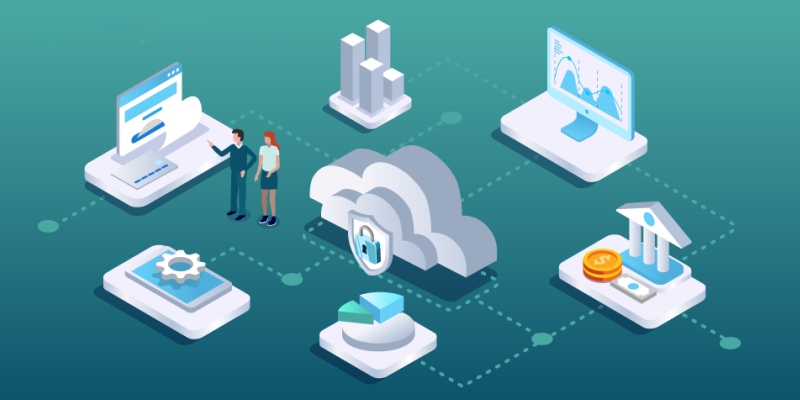
The world is making advancements in the cloud, and businesses are expected to keep their operations safe. Organizations are solely dependent on cloud platforms for storing data, running applications, supporting remote teams, and delivering digital services to customers. Flexibility, scalability, and cost savings are offered by the cloud. Cloud security is no longer just an IT concern; it has become a business priority.
Issues like misconfigured storage, weak access controls, insecure APIs, and increasingly sophisticated cyber threats are exposing sensitive information and disrupting operations. Even a minor security gap can lead to loss in finances, legal complications, and damage to customer relations for growing businesses.
A cloud security assessment helps organizations to understand where they stand, identify vulnerabilities, and strengthen protection before problems escalate. Cloud security helps in securing systems, maintaining compliance, and ensuring uninterrupted service delivery. It helps in security breaches before they even happen.
At TMITS, cloud security assessments are designed in a way that they can provide clear insights. Practical recommendations that improve security without disrupting daily operations are provided.
What Is a Cloud Security Assessment?
The primary purpose of this assessment method is to identify potential risks, identify existing vulnerabilities, and verify that the environment meets security best practices and compliance standards.
Cloud Security Assessment is a comprehensive method for evaluating an organization's entire cloud computing environment, including its cloud infrastructure, applications, configurations, and security controls. The assessment typically reviews:
- Cloud infrastructure and configuration settings
- Identity and access management (IAM) controls
- Data protection and encryption practices
- Network security architecture
- Compliance readiness and governance policies
- Monitoring, logging, and incident response capabilities
By evaluating these areas, organizations gain a clear understanding of their cloud security posture and receive actionable recommendations for improvement.
Why Cloud Security Assessments Are Essential
1. Protect Sensitive Business and Customer Data
Critical information, including customer records, financial data, intellectual property, and operational systems, is stored on cloud platforms. Without proper safeguards, this data may be stolen.
Security assessments verify encryption practices, secure storage configurations, and proper access permissions.
Business Impact: Prevents data breaches and protects customer trust.
2. Detect Vulnerabilities Before Attackers Exploit Them
Frequent updates or configuration changes can introduce security gaps as cloud environments are dynamic. Public storage, needless high-privilege users, permissions, and antiquated firewall rules are the most common risks that can happen to your organisation.
Timely assessments can help in identifying and remedying vulnerabilities early.
Business Impact: The risk of cyberattacks, ransomware incidents, and unauthorised access can be reduced.
3. Ensure Regulatory Compliance and Audit Readiness
Sectors like finance, healthcare, SaaS, and e-commerce are very data-focused, which is why complying with strict data protection and security regulations is important.
Cloud security assessments help align systems with standards such as:
- GDPR
- HIPAA
- PCI-DSS
- ISO 27001
- SOC 2
Business Impact: Reputational damage through legal penalties and compliance violations can be avoided.
4. Strengthen Identity and Access Management (IAM)
Unauthorised access serves as one of the primary reasons for data breaches in most business operations. The organisation conducts regular assessments to evaluate authentication methods together with user roles and their corresponding permission levels.
They ensure:
- Least-privilege access policies
- Implementation of multi-factor authentication (MFA)
- Managing secure credential
- Monitoring of privileged accounts
Business Impact: Prevents insider threats and credential-based attacks.
5. Improve Business Continuity and Disaster Recovery
Backups, redundancies, and recovery planning are vital considerations to solidify a framework that supports resiliency against disruption in your IT infrastructure.
Business Impact: Rapid recovery and uninterrupted operations during outages or cyber incidents are ensured.
6. Support Secure Scaling and Digital Growth
Businesses introduce additional components and personnel and operational tools to expand their operations, which creates inevitable cloud security concerns which create new ways for attackers to access their systems.
Security evaluations scale in proportion to the growth of the company.
Business Impact: Secure growth is supported without sacrificing security.
Key Areas Evaluated in a Cloud Security Assessment
Cloud Configuration Security
- Storage or services which are exposed publicly are detected.
- Configuration is secure, which computes and stores resources.
- Misconfigured permissions can be identified.
Identity & Access Management (IAM)
- Role-based access control review
- Enforcement of multi-factor authentication
- Monitoring privileged user
Network Security
- Firewall rules and security group configuration
- Network segmentation and isolation
- Secure connectivity via VPNs and private endpoints
Data Protection & Encryption
- Encryption at rest and in transit
- Key management and rotation practices
- Backup and data lifecycle policies
Compliance & Governance
- Regulatory alignment and audit readiness
- Policy enforcement and documentation
- Risk management frameworks
Threat Monitoring & Incident Response
- Logging and monitoring systems
- Real-time alerting mechanisms
- Incident response preparedness
Signs Your Business Needs a Cloud Security Assessment
You should consider a cloud security assessment if you experience:
1. Rapid Cloud Adoption Without Security Planning
2. Storage of Sensitive Customer or Financial Data
3. Frequent Infrastructure or Configuration Changes
4. Compliance & Regulatory Requirements
5. Expansion into New Markets or Digital Services
6. Concerns About Unauthorized Access or Data Leaks
7. Increased Remote Work & Cloud Collaboration
Benefits for Growing Businesses
Cloud security assessments provide advantages beyond protection:
- Costly breaches and downtime are prevented
- Strong customer trust and brand credibility are built
- Maintain compliance with regulations
- Improve system reliability and performance
- Enable secure digital transformation
- Reduce long-term security and operational costs
Security is not just protection. It is a business enabler that supports sustainable growth.
Best Practices for Maintaining Cloud Security
While assessments provide insights, maintaining security requires continuous monitoring and improvement.
Recommended practices include:
- Implementing least-privilege access policies
- Enabling multi-factor authentication across systems
- Encrypt sensitive data at rest and in transit
- Conducting regular vulnerability scans and audits
- Monitoring activity using real-time logging and alerts
- Keeping systems updated and patched
- Training employees on cybersecurity awareness
- Scheduling periodic security assessments
Security should be treated as an ongoing process rather than a one-time effort.
How Often Should You Conduct a Cloud Security Assessment?
The frequency depends on business size, industry risk level, and regulatory requirements.
General recommendations:
- Annually for standard business operations
- Quarterly for high-risk industries (finance, healthcare)
- After major infrastructure changes or migrations
- Before compliance audits
- Immediately following a security incident
Regular assessments ensure your environment remains secure as threats evolve and technologies change.
Final Thoughts
In today's competitive world, where all businesses are competing with each other, cloud security is a must. Cloud Security Assessment offers crucial visibility into weak links, reinforces preventive controls, and assures meeting industry standards. With advanced and evolving cyber threats, combined with the ever-expanding cloud landscape, security assessment is key.
By recognizing potential risks early and putting the right security controls in place, businesses can scale operations with confidence, protecting their most valuable digital assets. Companies that focus on securing the cloud are better able to secure customer data, maintain business continuity, and earn trust in a rapidly evolving digital economy.
With so much at stake, it’s no longer just about making an investment in cloud security.
FAQs
What is the main purpose of a cloud security assessment?
The main purposes of cloud security assessment include identifying vulnerabilities, evaluating security controls, and ensuring your cloud environment is protected against threats while meeting compliance requirements.
How long does a cloud security assessment at TMITS take?
The time required completely depends on your business and the complexity of its cloud environment. Small environments may take a few days, while large enterprise systems can take several weeks.
Is a cloud security assessment necessary for small businesses?
Yes. Small businesses are frequent targets of cyberattacks due to limited security measures. Assessments help in the identification of risks and the strengthening of company policies.
Will a security assessment disrupt business operations?
No. Testing at TMITS is planned carefully; most assessments are conducted in a way that they do not affect daily operations to avoid downtime or service interruptions.
What risks can a cloud security assessment uncover?
With the help of cloud security assessments, risks such as misconfigurations, weak access controls, unencrypted data, compliance gaps, insecure APIs, and vulnerabilities that could lead to data breaches are avoided with
How often should cloud security assessments be performed?
It generally depends upon your organization, but we recommend at least once a year, or more frequently if your organization operates in a regulated industry, undergoes major infrastructure changes, or handles sensitive data.
Can cloud security assessments at TMITS help with compliance audits?
Yes. At TMITS, we ensure your systems meet regulatory standards and provide the required documentation for audits and certifications.
What happens after the assessment is completed?
Your business will receive a detailed report outlining vulnerabilities, risk levels, and recommended remediation steps to strengthen your security posture.