

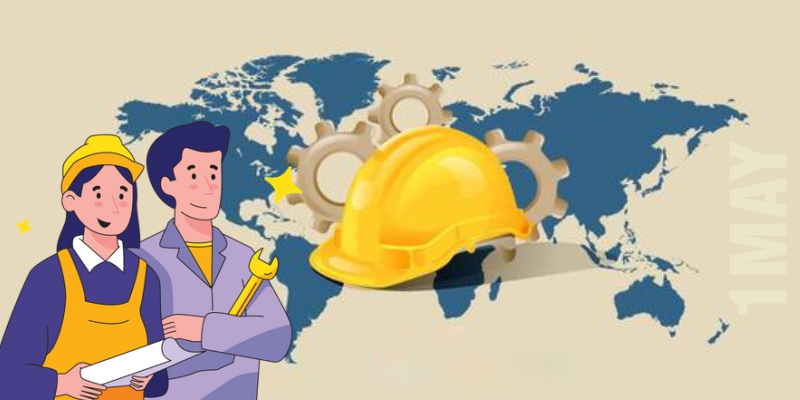
Labour Day does not feel the same as it used to. It used to be easier to picture what it stood for. Physical work, visible effort, defined roles. Now things are less obvious. Work still happens, just not in ways that are always easy to see.
Most of it sits behind systems. Code is running quietly. Networks are staying up without interruption. Issues are being solved before anyone notices them. It is easy to overlook how much effort goes into keeping things that way.
At TMITS, this is not something abstract. It is part of how work unfolds every day. The outcomes are visible. The effort behind them, not always. That gap is exactly why Labour Day still matters.
Work Did Not Get Easier, It Just Changed Shape
There is a tendency to assume that because work is now digital, it is somehow lighter. In reality, it has just become different.
People are expected to move faster. Learn while working. Handle situations that do not always have clear instructions. Even roles that sound straightforward often involve multiple layers underneath.
A developer is not just writing code. There is coordination, debugging, and adapting to changing requirements. A security professional is not just monitoring systems. They are anticipating problems that have not happened yet.
Creating Space For Better Work, Not Just More Work
The improved systems very often result in greater expectations for completing work in reduced time frames; efficiency is expected, but could lead to overload unless managed effectively.
Typically speaking, there are two components of productivity; output is one component, but an equally important component is sustainable productivity.
Constant work without space for thought or rest = reduced quality of work produced over time.
The creation of space does not have to slow everything down; it requires that the structure of work be considered thoughtfully. If consideration can be made to allow for review, reflection, and adjustment, there will be a marked positive impact on performance over the long term.
When Everything Works Nobody Notices
That is probably one of the more frustrating parts of digital work.
If systems run without failure, it looks like nothing happened. Which is exactly the point, but also the problem. Smooth operations tend to hide the effort that made them possible.
Labour Day is one of those rare moments where it makes sense to pause and actually think about that. Not in a dramatic way. Just a simple acknowledgment that stability takes work.
Support cannot Be Occasional.
In slower environments, you could get away with periodic training or occasional check-ins. That does not hold up anymore.
Things move too quickly. By the time someone gets comfortable with one tool or system, something else changes. Without consistent support, that gap shows up sooner or later.
At TMITS, we have seen that small, regular improvements work better than large, infrequent ones. Giving people time to adjust.
Making sure expectations are clear. Fixing processes that slow things down. None of this is complicated, but it needs to happen consistently.
Flexibility Sounds Good Until It Is Not Managed Well
Remote work, hybrid setups, flexible hours. All of it sounds straightforward on paper. In practice, it can go either way.
Without structure, flexibility turns messy. Communication becomes uneven. Work spills into personal time. People end up being available all the time without really planning to be.
A working setup needs some boundaries. Clear timelines. Defined responsibilities. Not rigid, but not vague either.
Getting that balance right takes effort. It does not just fall into place.
The Importance Of Quiet Problem Solving
Not every contribution gets acknowledged; in fact, in the digital world, some of the most crucial contributions occur without any recognition. For example, problems/concerns get resolved before there is a chance for it to escalate into an issue; changes are made, and healthy decisions are made before the failure of the system process, and/or minor changes prevent significant issues from occurring.
Although the above actions/contributions may never get recognised as standing out (are not very visible), they are the thing that holds everything together. Recognising this fact is of value to everyone involved, as well, in many instances, the absence of a problem is just as big an accomplishment as having resolved the concern.
Labour Day serves as a reminder of this fact, as success can be measured by being free of problems and by the absence of any problems.
Recognition Is Easy To Talk About Harder To Get Right
Most organisations will say they value their teams. That part is expected.
What matters more is how often that shows up in small ways. Not just formal recognition, but everyday acknowledgment. Someone is solving an issue quickly. Someone stepping in when needed.
In digital roles, a lot of this goes unnoticed unless someone makes the effort to call it out.
Labour Day brings attention to recognition, but ideally, it should not depend on a date.
Technology Is Not The Whole Story
There is a lot of focus on tools, platforms, and automation. All of it matters. But it is not the full picture.
Technology works because people understand how to use it properly. Without that, even the best systems fall short.
At TMITS, the focus has always been on keeping that balance. Using technology to improve how work gets done, without losing the human side of it.
Efficiency is important. So is judgment. One does not replace the other.
Teams Do Not Work Well Just Because The Tools Are Good
It would be easier if that were true. It is not.
Good tools help, but they do not fix communication gaps or unclear expectations. Those things show up regardless of what systems are in place.
What actually makes a difference is how teams interact. Whether people feel comfortable asking questions. Whether they know what is expected. Whether feedback is taken seriously.
These are not technical issues, but they affect technical work all the time.
Looking Ahead Without Rushing Past The Present
There is always something new coming up. New frameworks, new systems, new approaches. Keeping up with that is necessary.
At the same time, the current workload does not pause. People are still handling ongoing responsibilities while adapting to new ones.
That overlap can get heavy if it is not managed properly.
It helps to slow things down just enough to make sure teams are not constantly catching up. Progress is important, but it should not feel like a race all the time.
The Shift From Jobs To Roles That Keep Evolving
Over the past few years, there have been significant changes in the way roles work; specifically, they continue to evolve in an incredibly fast time frame. For many companies, their job title is still intact, but the actual role within that job title often shifts within a matter of months. An employee who was originally hired for a particular responsibility may ultimately find themselves doing an entirely new set of responsibilities because of system expansions, priority changes, etc.
This type of evolution generally comes with a different set of pressures. In addition to performing a job well, an employee must also continuously prepare for how their job will change over time. Thus, maintaining static skill sets will not be sustainable.
Therefore, for organisations, hiring is not the only consideration. The hiring organisation must clearly communicate that the positions they are hiring into will continue to expand and evolve over time. In addition, they must support the transition of their employees as needed because of the ongoing evolution of the business operations.
At TMITS, we take an approach that is based on flexibility, as opposed to strictly defining. We do not define roles by rigid boundaries; rather, we focus on developing an environment in which our employees can continue to develop as needed, regardless of the evolution of the business.
Labour Day Stripped Down To What It Really Is
At its core, Labour Day is not complicated. It is about recognising effort.
That idea still applies, even if the environment looks completely different now. The tools changed. The nature of work changed.
The need to acknowledge effort did not. This is not something that comes up once a year. It is a reminder more than anything else. A check on whether we are paying enough attention to the people doing the work.
Closing Thought
Work will keep evolving. That part is certain. Roles will shift, expectations will change, and systems will improve.
What should not get lost in all of that is the people behind it.
At TMITS, that remains the focus. Not as a statement, but as something that shows up in how work is actually managed day to day.
FAQs
1. Is Labour Day still relevant for digital jobs?
Yes, because digital work still depends heavily on people, even if the effort is not always visible.
2. What makes digital work challenging today?
Constant changes, the need to keep learning, and managing work that does not always have fixed boundaries.
3. How can companies support their teams better?
By being consistent. Clear communication, realistic expectations, and regular support tend to work better than one-time initiatives.
4. What role do IT companies play in this space?
IT companies focuses on improving how work happens on a daily basis, making processes smoother and supporting teams as they adapt to change.
5. How is modern work different from traditional labour?
It is less visible and more continuous. Instead of physical output, much of the effort goes into maintaining systems and solving ongoing problems.