If you step back and look at how software development has evolved over the last decade, one thing becomes quite clear after a while. A large part of that change seems to be connected to India.
It is not always obvious at first. You might notice a company building products faster, or a startup scaling quicker than expected, or even large enterprises shifting how they approach development. But if you follow the trail behind those changes, India shows up quite often.
It's interesting to think about how this didn't happen by accident; it's taken a lot of years to build up to this with not too much fanfare along the way. As of 2026, there is little debate as to whether this is a trend or a direction. Software development in India is a rising tide.
TMITS gets a lot of inquiries from businesses regarding their software requirements. Businesses aren't necessarily looking for just software anymore; rather, they need scalable systems, flexible architectures, and solutions that will support continuing growth. A significant number of these development activities are being performed in India.
It Started with Services, but Did Not Stay There
For a long time, India was known mainly for IT services. Outsourcing to India became common because it made sense. Skilled developers, lower costs, and the ability to deliver consistently.
But that is only part of the story now.
Over time, the role has shifted. Indian software companies are no longer just executing tasks given by clients. They are involved earlier in the process. Planning systems, designing architectures, and sometimes even shaping business decisions.
This shift from execution to ownership has changed how global businesses look at software development in India.
It is no longer just about getting work done. It is about building things the right way from the start.
The Talent Pool Is Still One of the Biggest Factors
There is no way to talk about this without mentioning talent.
India produces a large number of software engineers every year. But what matters more is how that talent is evolving. Developers are not just learning coding languages. They are working with cloud systems, AI tools, and modern frameworks from the early stages.
This creates a workforce that is adaptable.
When technology changes, which it does quite often, the ability to adjust becomes more important than anything else. And that is something Indian developers have shown consistently.
At TMITS, this adaptability plays a big role in how projects are approached. Requirements change, priorities shift, and systems need to evolve. Having teams that can handle that without slowing things down makes a difference.
Digital Transformation Is Moving Faster Here
Another reason India is playing a larger role is the pace at which digital transformation in India is happening.
Businesses across industries are moving toward digital systems. Not gradually, but sometimes quite quickly. Banking, healthcare, retail, logistics, and almost every sector are adopting technology in a deeper way.
This creates an environment where software development is not just a support function. It becomes central to how businesses operate.
Working in this kind of environment naturally pushes developers and companies to think differently. Solutions need to scale. Systems need to handle real-world complexity.
That experience carries over when working with global clients.
Startups Are Changing the Landscape
The Indian startup ecosystem has also played a part in this shift.
Startups tend to move fast. They experiment, fail, adjust, and try again. In doing so, they push boundaries in terms of what software can do.
Many of these startups are building SaaS development India products that are used globally. Not just locally.
This creates a different kind of exposure. Instead of building for one market, teams are thinking about multiple regions, different user behaviors, and varied requirements.
That kind of thinking influences how software is built overall.
Cloud and AI Are Becoming Standard
A few years ago, cloud computing in India and AI development in India were seen as advanced areas. Now they are becoming part of regular development work.
Most new systems are built with cloud in mind from the beginning. Scalability is not added later. It is considered from the start.
Similarly, AI is being integrated into applications in practical ways. Not always in complex forms, but in ways that improve functionality.
This combination of cloud and AI is shaping the future of software development globally, and India is very much part of that shift.
Outsourcing Has Evolved Into Collaboration
Outsourcing to India used to be seen as a separate function. Work would be assigned, completed, and delivered. Now it feels more like collaboration.
Teams work together across locations. Communication is more direct. Feedback loops are shorter.
Global IT outsourcing in India has moved from a transactional model to a more integrated one.
This improves quality and also builds stronger relationships between businesses and development teams.
At TMITS, this collaborative approach is something that comes up often. Projects are not just handed over. They are built together.
Cost Still Matters, but It Is Not the Only Reason
Cost advantage is still one of the reasons companies choose Indian IT services.
But it is no longer the main reason.
Quality, speed, and the ability to scale have become equally important. In some cases, even more important.
Businesses are willing to invest where they see long-term value. And that value is increasingly coming from well-built systems rather than just lower costs.
Innovation Is Becoming More Visible
There was a time when innovation was associated mostly with certain regions. That perception is changing.
Indian innovation technology is becoming more visible, not just in startups but also in enterprise solutions. Companies are experimenting with new approaches, building platforms, and creating products that are used globally.
This is contributing to India's technology trends that influence how software is developed elsewhere.
Where TMITS Plays A Vital Role In This
From what we see, the demand is not just for software. It is for systems that can grow with the business.
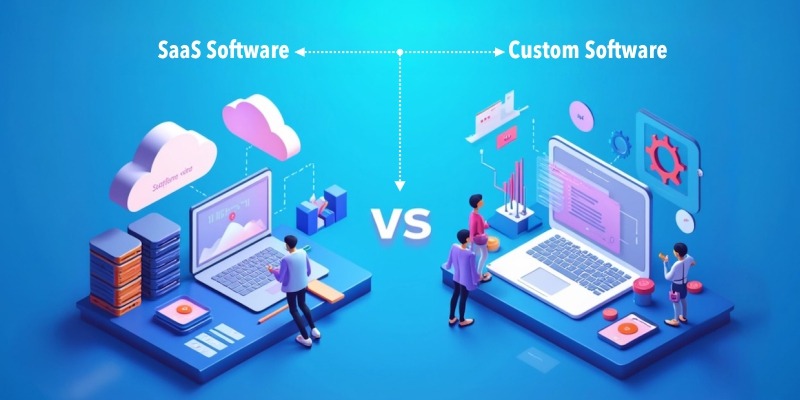
Custom software development India plays a big role here. Solutions are not one size fits all anymore.
At TMITS, the focus is usually on building systems that are flexible. Systems that can handle change without needing to be rebuilt completely.
This approach aligns with how businesses are evolving. Fast, unpredictable, and always looking to scale.
The Bigger Picture
All of these factors, which include talent, startup activity, cloud computing, artificial intelligence, and global collaboration, have come together, making it easier to understand why India is in the lead for all of these items together than any other country.
This is due to a number of different things happening simultaneously rather than one cause alone.
An additional advantage to India's being in the lead is their communities’ willingness to adapt.
Final Thoughts
Software development continues to evolve and innovate; it's never been a stagnant field. As of 2026, India will also be instrumental in shaping how India will define the future of software development and software systems.
While there are many aspects of this change that are not always visible to an outsider, all these changes will have a meaningful impact on how the software industry will operate and change, particularly in the way that electronic systems are created, the way that teams collaborate, and the way that businesses will continue to evolve due to their software and platform evolution.
For the foreseeable future, it appears as if this trend is going to continue to grow and expand.
FAQs
1. Why is India leading in software development
India has a large talent pool, strong IT infrastructure, and growing expertise in modern technologies like AI and cloud computing.
2. Is outsourcing to India still relevant in 2026
Yes, but it has evolved into a more collaborative approach rather than just task-based outsourcing.
3. What makes Indian developers competitive globally
Adaptability, technical skills, and experience with diverse projects make them highly competitive.
4. How is India contributing to the future of software development
Through innovation, startup growth, and the adoption of advanced technologies across industries.
5. What role do IT companies play
They help businesses build scalable and flexible software systems aligned with modern development practices.